The summer weather is upon us, and this is the ideal time to consider treatments to enhance to the firmness and smoothness of the skin on our bodies. Cellulite remains one of the most common and certainly most challenging skin concerns to treat, and is thought to affect up to 80-90% of individuals, mainly women. Clinically, it presents as dimpling causing an uneven and pitted appearance to the skin, and may potentially have a significant impact on psychological well-being and self-confidence. In spite of its’ prevalence, cellulite has historically been misunderstood to be a condition influenced by excessive weight, when it is now understood that this is not usually one of the underlying causes. Women of all ages, and races may potentially be affected, and whilst the prevalence and incidence of cellulite is inconsistently reported, it is thought that Caucasian females are more predisposed than those of African American and Asian descent. Recent evidence suggests that cellulite may, in part, be considered as a structural disorder of the dermis (skin) and closely associated subcutaneous tissue (superficial fatty layer).
The causes of cellulite are thought to be due to 3 key influencing factors:
- Male/female differences in the structure of the skin: Females have an inherently weaker skin architecture which predisposes women to developing cellulite. This is further compounded by different biomechanical forces within layers of the skin. In addition, periods of raised oestrogen levels, such as pregnancy, breast feeding, oral contraceptive use, as well as hormone
replacement therapy may also exacerbate the progression of cellulite. - Vascular influences: There is noted to be increased capillary permeability and poor clearance of metabolic waste products within the vessels in the skin. This leads to an accumulation of toxic heavy metals which negatively impacts the microcirculation, and worsens the effects of cellulite.
- Inflammatory influences: Low-grade chronic inflammation weakens the overall structural support of the skin, and means it is more likely see fat herniation (unevenness and bulging). There is also noted to be the reduced presence of an adipocyte- derived (fat-derived) hormone which has anti-inflammatory properties, as well as increased oxidative stress. Current evidence supports the role of systemic inflammation, chronic stress, physical inactivity and pro-inflammatory dietary patterns in the persistence and progression of cellulite. These are important factors to take into account when planning a course of treatment.
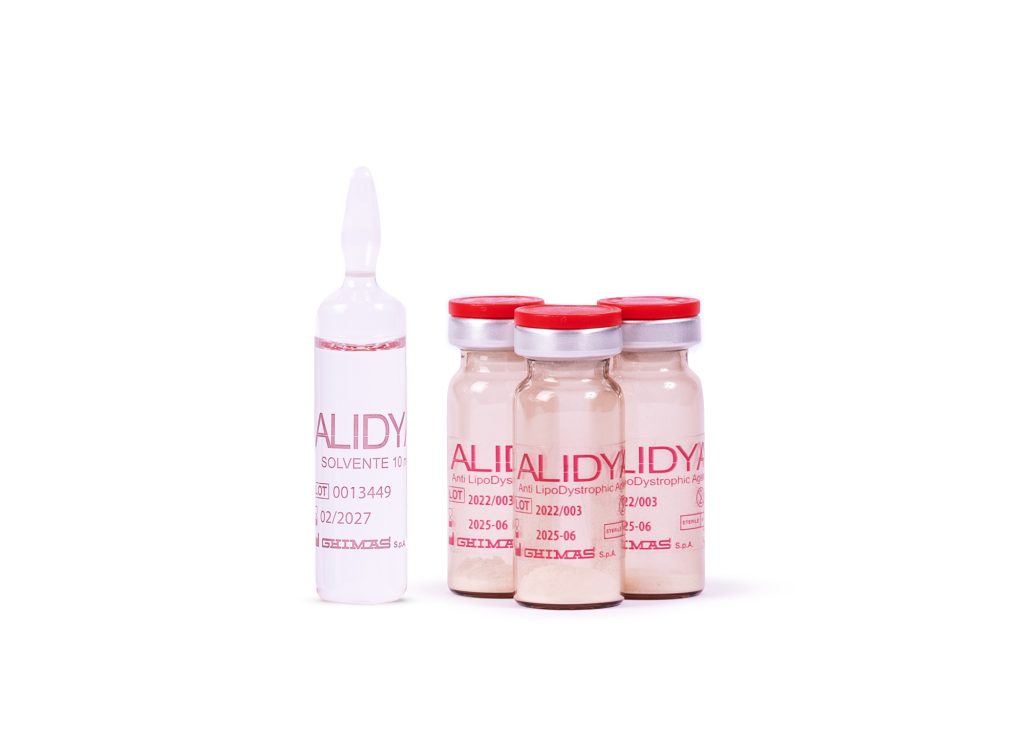
Alidya Injectable Cellulite Treatment
Alidya is the first CE-marked injectable medical device specifically developed for the treatment of cellulite. It is used in over 70 countries worldwide with an excellent safety profile and strong clinical data. It is neither a drug nor a dermal filler, but is a regenerative treatment based on amino acids, chelating agents and antioxidants. Alidya is born out of 12 years of research to demonstrate its’ high performing safety profile and clinical effectiveness.